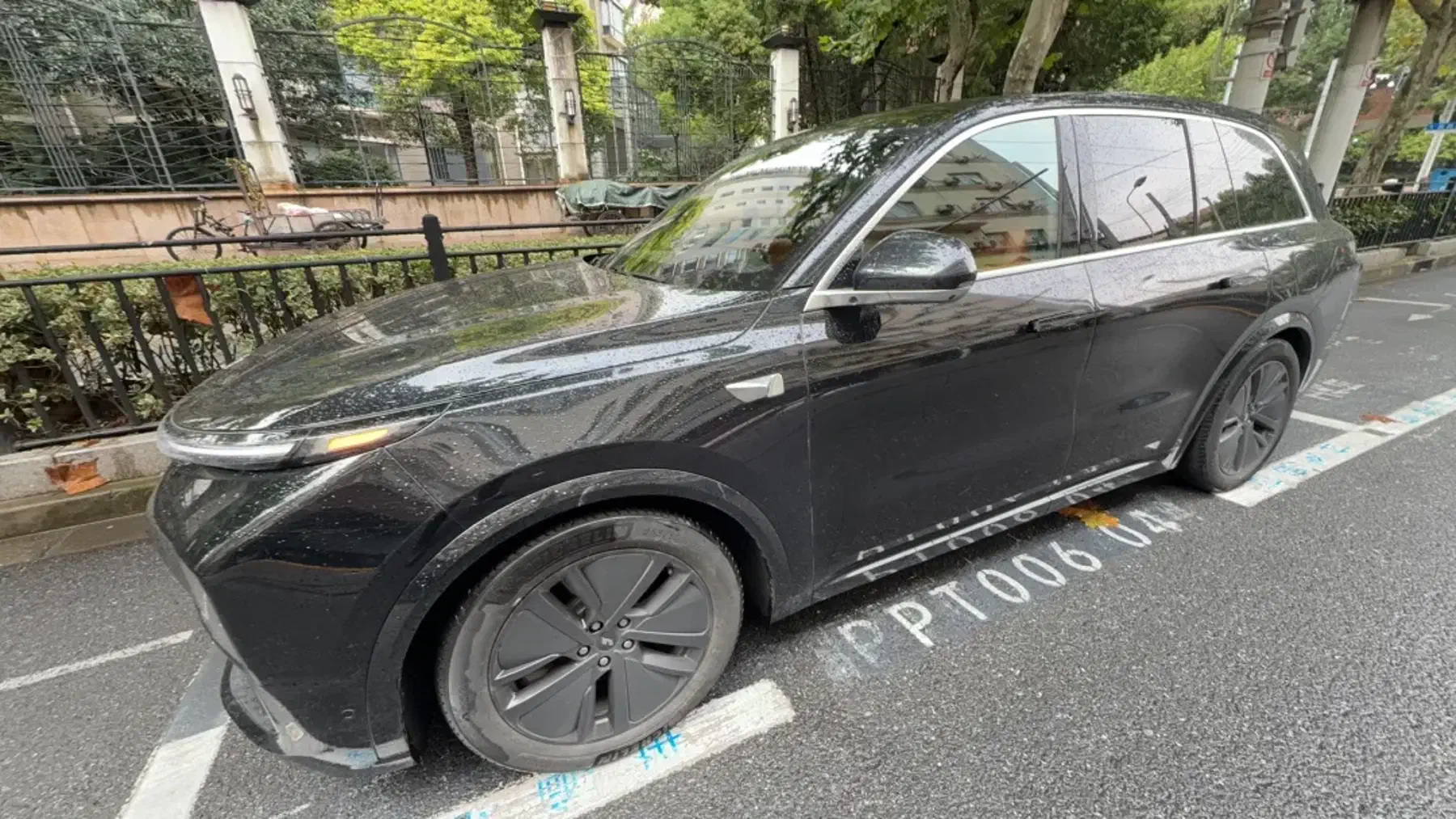
My First EV Road Trip

I’ve been driving for 12 years—databases by trade, cars on the road—yet until this trip, I had never once been behind the wheel of an EV.
It’s not that I’m some diehard internal-combustion fundamentalist; I just don’t have a daily commute. Back when I worked in an office, I usually lived within 300 meters of work, so a car had no use. Now I run a one-person company from home and barely step out of the house once a week. Owning a car would just mean letting it gather dust in an underground garage.
The only time I drive is on long road trips. I once spent over three months driving across Xinjiang and western China, and I’ve done one- to two-week road trips through the American West and Canada. When you’re covering thousands or tens of thousands of kilometers on an overland trip, reliability and zero drama come first. Every time, I picked a gasoline car without a second thought to avoid headaches along the way.
That changed recently. A friend bought a new EV, and I took its assisted-driving system for a spin. It was genuinely impressive. So when my wife and I planned a trip to Huangshan a few days ago, I figured: why not rent an EV this time and try it properly?
Choosing by Elimination: The Li Auto L8?
A quick scan of the CAR Inc. rental app showed that the EVs available at nearby branches came down to four brands: BYD, Tesla, Li Auto, and AITO (Wenjie in Chinese). My elimination process was blunt:
- BYD: Sitting in one always feels like driving a ride-hailing car, which takes some of the fun out of a road trip. Skipped.
- The “-jie” brands: Anything with jie (界) in its Chinese name—Huawei’s automotive alliance lineup—was off the list without a second look. I have no desire to invite that kind of baggage.
- Tesla: Good cars, but Full Self-Driving (FSD) still isn’t fully enabled in China, and the main point of this rental was to experience smart driving. Set aside for now.
That left the Li Auto L8.
Renting it wasn’t cheap. A BMW 3 Series at the same agency went for 100 yuan a day; the Li Auto L8 cost 450 yuan a day for the base rate alone, and nearly 600 yuan a day out the door once service fees and insurance were added.
Strictly speaking, the Li Auto L8 isn’t a pure battery EV, but an extended-range electric vehicle (EREV). Electric motors drive the wheels, while the chassis packs both a battery and a fuel tank—when the battery runs low, an onboard engine burns gasoline to generate electricity, with a claimed combined range of over 1,100 km. For a longtime gas-car driver trying an EV for the first time with some lingering range anxiety, it felt like a safe way to ease in.
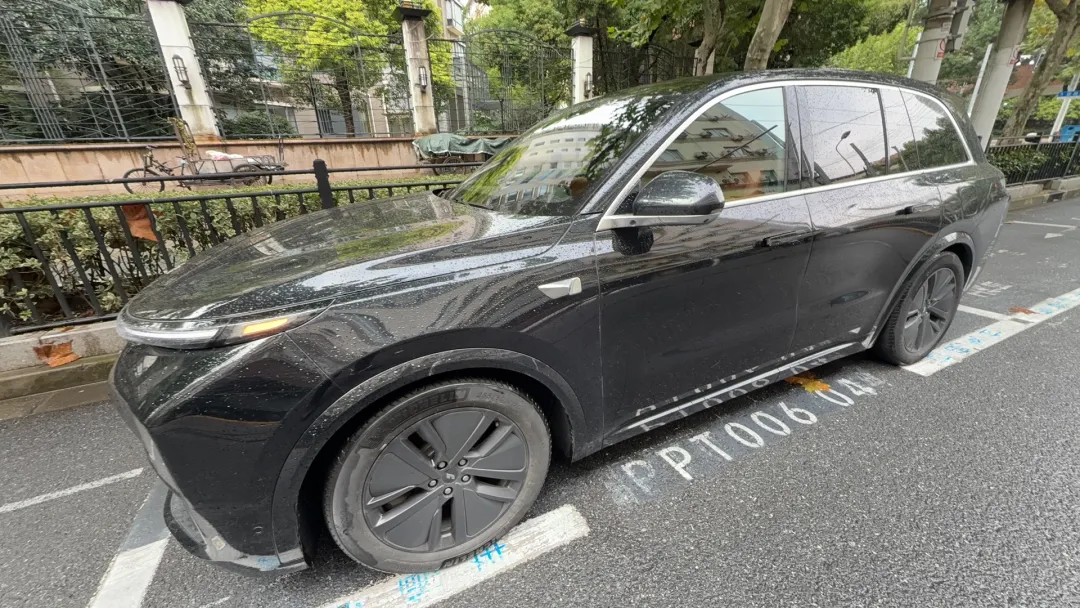
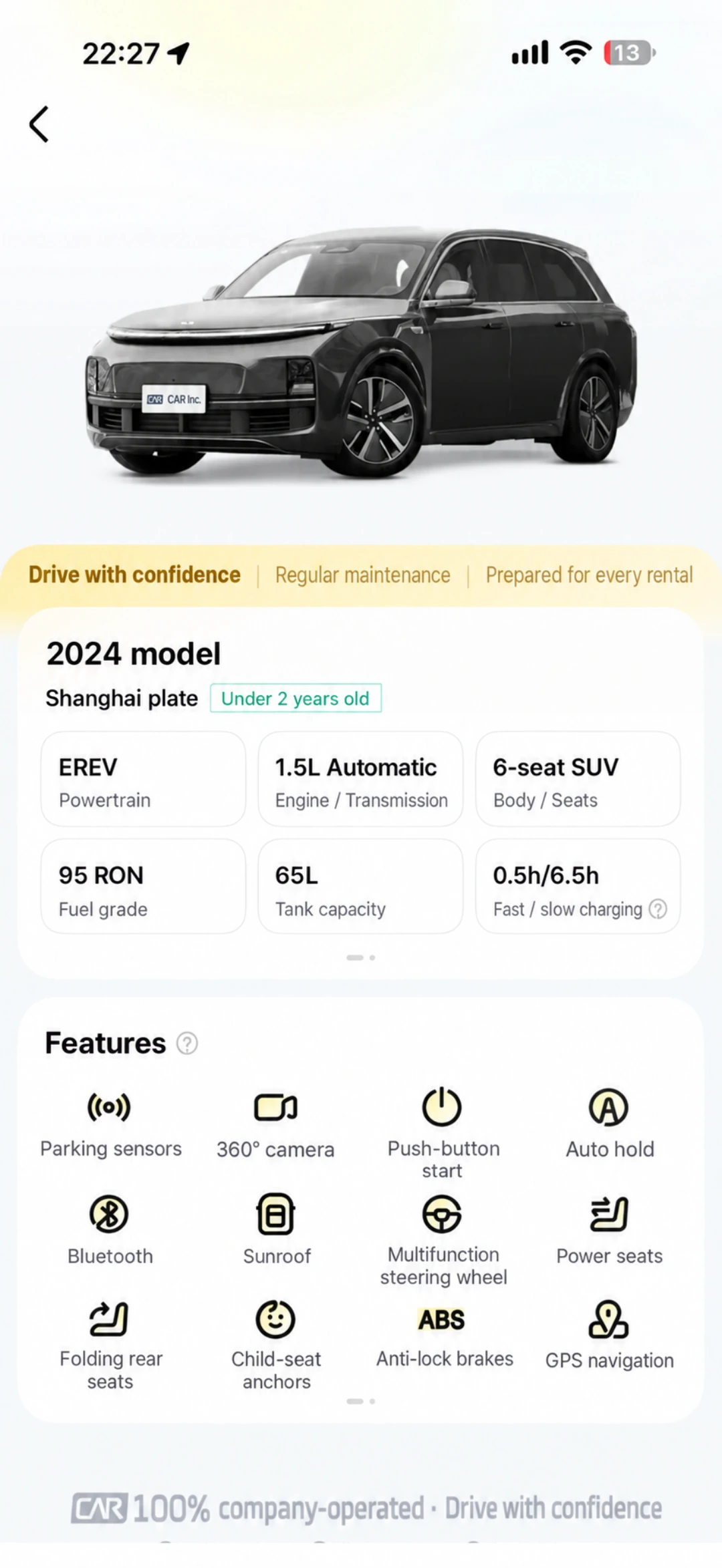
After three days behind the wheel, my verdict comes down to two words: genuinely solid.
Attention Is the Scarce Resource: Assisted Driving Wins
We drove from Shanghai to Hangzhou and then straight on to Huangshan—over 400 km one way across congested city streets, elevated expressways, and long stretches of highway. Across all of those road conditions, I kept assisted driving engaged for nearly the entire trip.
People love to calculate how an EV saves a few tenths of a yuan per kilometer over a gas car. Honestly, I couldn’t care less what the car burns or whether it saves a few yuan on fuel. What actually made the rental worth the price was the attention that assisted driving freed up.
Whether for humans or for AI agents, attention is the most valuable resource today and in the future. On a long highway haul in a gas car, you have to stay locked in: holding the lane, working the throttle and brakes, and processing a continuous stream of micro-decisions at high frequency. After a few hundred kilometers, you’re exhausted. With assisted driving switched on, you step back to monitoring the broader traffic picture as a fallback supervisor. The cognitive load drops by an order of magnitude.
To make a slightly politically incorrect admission: while cruising on the highway with assisted driving on and my wife watching a TV series on the front passenger screen, I even had enough spare attention to sneak glances at her screen out of the corner of my eye. Obviously, that’s not safe practice—don’t copy me—but in a traditional gas car, it would be flatly out of the question.
For a first-time EV driver, the cabin’s voice assistant also lowered the barrier to entry. When I first got in, I had no idea where half the controls were buried. The upside was that I didn’t need to know—I could just ask out loud: “How do I turn on assisted driving?” or “Where are the buttons?” Even everyday actions like turning on the wipers or locking the car took a single voice command instead of digging through menus. And when we reached our destination, its foolproof one-tap auto-park found a spot and backed the car right in.
Charging and the Cabin: The “Fridge, TV, and Plush Sofa” Formula
This highway run also changed my view of EV charging and energy efficiency. I had assumed an EREV—burning gas to generate electricity and then using that electricity to drive a motor—would suffer noticeable conversion losses. In practice, a vehicle this large averaged only about 6 liters of fuel per 100 km combined, which is remarkably economical.
Charging was an even bigger surprise. The battery alone provides roughly 200 to 300 km of range. Along the highway to Huangshan, nearly every service area had charging stalls, and once we reached the scenic area, charging spots were everywhere we stopped to eat or park.
This was my first time ever handling a charging gun, and it was far simpler than I expected: scan a QR code in WeChat, pull the connector from the stall, and plug it in. We went for a meal at a highway service area and wandered back half an hour later to find the battery up from the low teens to 85%. At 0.8 to 0.9 yuan per kWh, twenty-odd yuan covers roughly 200 km. Compared with gasoline, that cost is practically a rounding error—I now completely understand why almost every ride-hailing car on the street is electric.
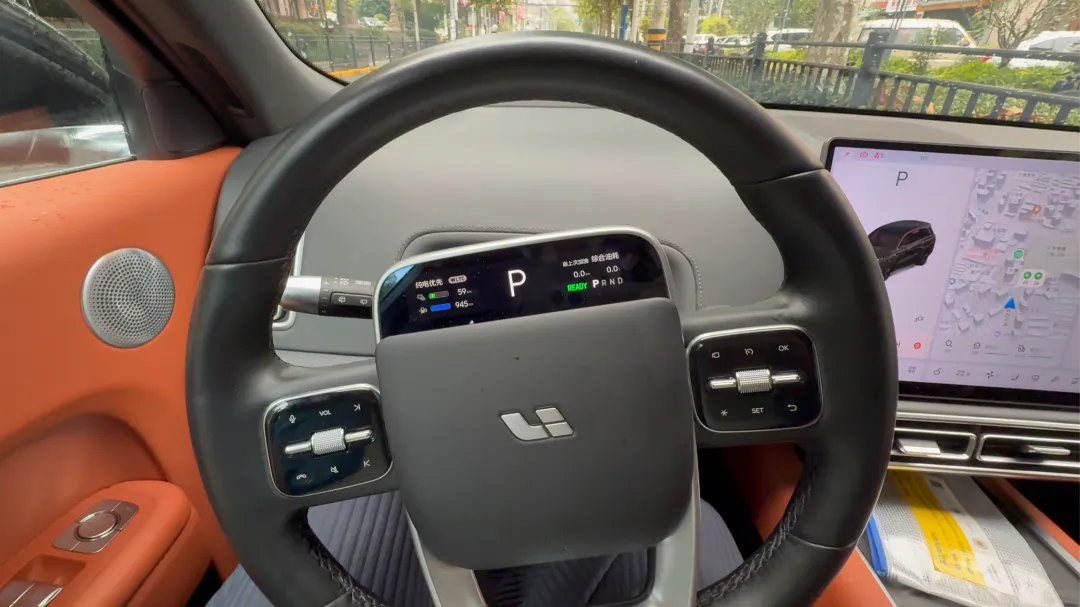
My biggest reservation about EVs used to be time pressure on a trip: a gas car takes five minutes to fill up and leave, whereas waiting half an hour to charge sounded painful. Once the infrastructure is in place, though, plugging in while you eat or use the restroom at a service area doesn’t cost you any extra time at all.
As for the cabin, I have to admit that the “fridge, TV, and plush sofa” formula favored by China’s newer EV makers—complete with ventilated, heated, massaging seats—is genuinely comfortable. It even got me thinking about the old Audi my mother has driven for more than a decade, and whether trading it in for an EV would make her everyday driving much more comfortable and effortless.
My one lingering reservation is whether some of these newer EV brands might follow the playbook of certain other companies: make the visible creature comforts—the fridge, screens, and plush seats—look impressive on the surface while quietly cutting corners on the chassis and passive safety.
On core engineering fundamentals, I still think Tesla is the most solid. Still, if my wife buys a car down the road, I’d probably cross-shop Tesla, Xiaomi, Li Auto, XPeng, and NIO, and I’m open to others. The only brands that turn my stomach enough to be an instant pass are the “-jie” lineup—if you know, you know.
Occupational Hazard: Data Privacy and Vehicle Ownership
Having covered the highlights, I’ll end with an occupational hazard of working in the data industry: data privacy and vehicle ownership.
A modern smart EV is essentially a smartphone on four wheels, relentlessly collecting telemetry in the background. Location history is the obvious part, but footage from interior and exterior cameras, cabin microphones, driving habits—everything you can think of, and plenty you wouldn’t—may be streaming to the cloud.
The deeper issue is ownership. When an automaker holds remote monitoring and even remote control privileges over a vehicle, that already weakens your ownership of the physical asset. If the manufacturer can arbitrarily restrict or disable your car from the cloud, force over-the-air updates on you, or serve splash-screen ads on the console, is the car still 100% yours?
In practice—especially when renting a car for a few days away—these concerns don’t matter much. But if I’m paying out of pocket for a car to keep for years, they become a trade-off I have to weigh.
We all trade privacy for convenience in modern life, and that bargain itself is acceptable. My line is clear: as long as automakers don’t get too greedy—acting like the rogue Android apps of years past, or crossing the line the way zcode did by quietly uploading users’ private code repositories—I can live with routine collection of anonymized driving data in exchange for assisted driving and a smart cabin.
Closing Thoughts
Three days and more than 400 km on this road trip to Huangshan were enough to reset my assumptions about EVs.
Granted, the lack of range anxiety had a lot to do with the destination: Huangshan sits in eastern China’s Jiangnan region, where charging infrastructure is exceptionally dense. If I were heading back to Xinjiang and Qinghai for a 40-plus-day overland trip, or driving through northeastern China, I’d still pick a pure gasoline car without hesitation. For most everyday driving and ordinary trips, though, I’m now wide open to EVs.
Veteran EV drivers reading this can go ahead and laugh—I really hadn’t driven one before, and never bothered to try. Giving it a spin this time taught me a few new things and made for a very pleasant trip. Next time I rent a car, I’ll probably try another EV brand and see what else they bring to the table.